बिहिबार, कार्तिक १२ २०८३
बिहिबार, कार्तिक १२ २०८३
मंगलबार, साउन २० २०८२
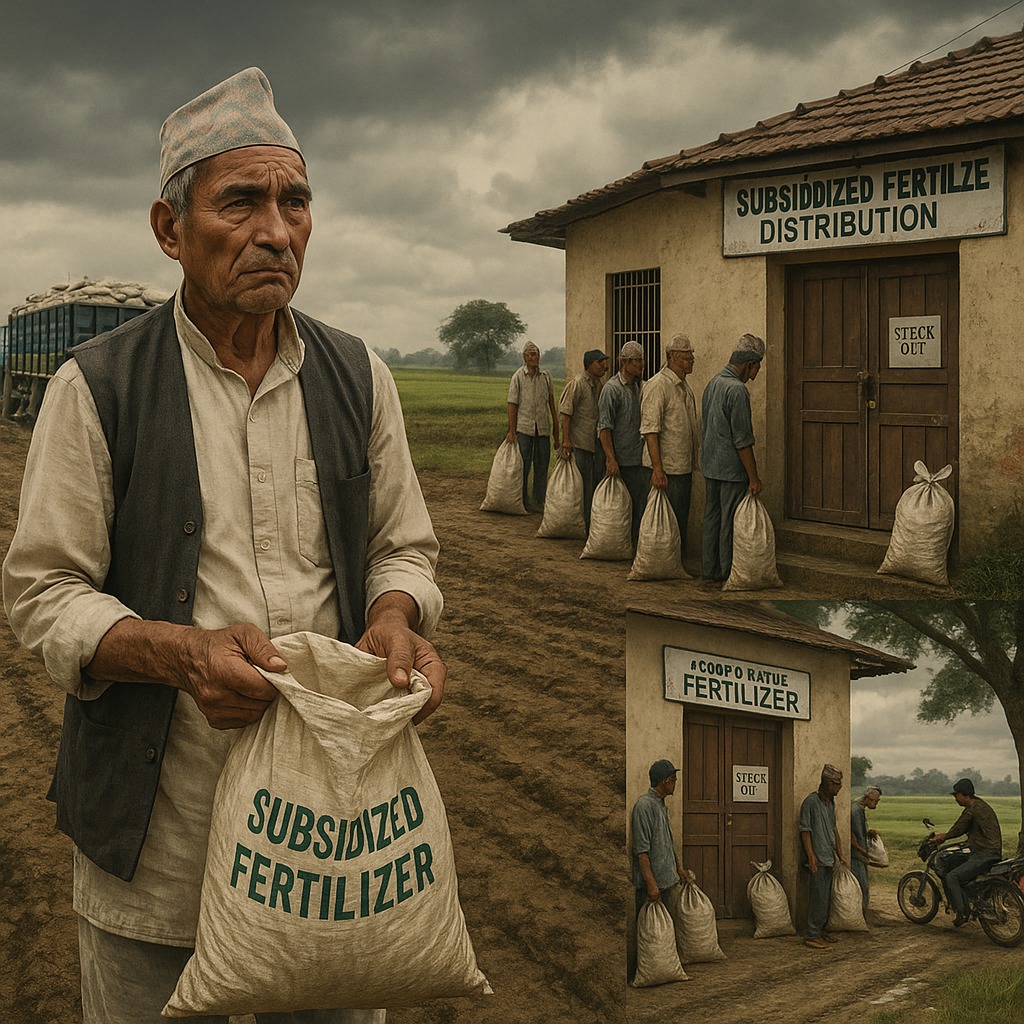
Each planting season in Nepal brings not hope, but anxiety. It is not the weather, pests, or natural disasters that worry our farmers the most, but something entirely preventable: the shortage of chemical fertilizers. In a country where over two-thirds of the population relies on agriculture, and where farming contributes around 25% to the national GDP, this recurring crisis is not only unacceptable, it’s a warning sign. An empty fertilizer bag is no longer just a supply issue; it is a glaring symbol of institutional failure, poor planning, and a deeply broken supply chain that begins with global procurement and ends in rural despair.
This is not a seasonal accident. It is a systemic breakdown of policy, logistics, and governance that affects every stage of the fertilizer journey. From late international procurement to poor internal distribution, from political indecision in Kathmandu to black market networks in the Tarai, the entire chain is inefficient and unresponsive. The result: Nepal’s farmers are left helpless, food production suffers, and the country spends billions importing what we could grow ourselves if only we had the right inputs at the right time.
The most visible symptom of this failure is the infiltration of low-quality, smuggled fertilizers from India. In districts like Bara, Rautahat, and Sarlahi, these products dominate local markets during peak demand seasons. This parallel market thrives because the state fails to deliver. It is a market born not out of competition, but out of desperation. Farmers, left with no option, purchase fertilizers that have neither been tested nor approved, risking soil degradation, poor yields, and long-term harm to their land. These products often carry Nepali-language packaging to appear legitimate, but lack quality assurance, correct NPK ratios, or even basic labeling.
At the center of this crisis lies the official supply chain flawed in both design and execution. Nepal’s fertilizer imports are handled by two major state-owned entities: the Agriculture Inputs Company Limited (AICL) and Salt Trading Corporation (STC). Together, they are responsible for importing an estimated 600,000 metric tonnes of chemical fertilizers annually, including urea, diammonium phosphate (DAP), and muriate of potash (MOP). The government subsidizes these fertilizers, selling them to farmers at reduced prices through cooperatives.
However, the theoretical framework rarely plays out in practice. Every year, tenders are issued too late, sometimes just weeks before the planting season begins. The process of floating tenders, finalizing contracts, opening letters of credit, and securing port clearance is slow, bureaucratic, and riddled with delays. By the time the fertilizers arrive in Nepal typically via the Kolkata port the planting season is either halfway through or already over. This lag forces farmers to either wait, reduce their cultivation area, or turn to the black market.
The international dimension adds another layer of vulnerability. Nepal heavily depends on imports from India and, to a lesser extent, China. While India remains the primary source due to cost and proximity, its export policies are unpredictable. When India restricts fertilizer exports to protect its domestic needs as it did in 2022 Nepal is left with few immediate alternatives. Unlike countries with multiple trading partners and buffer stock systems, Nepal lacks both diversification and contingency plans. It does not maintain strategic fertilizer reserves, which means even a small disruption in supply becomes a national crisis.
Transport and logistics further complicate the situation. Nepal, being landlocked, faces high freight costs and long transit times. The journey from Indian ports to border customs is often delayed due to procedural bottlenecks, truck shortages, or political strikes. Once inside Nepal, the distribution chain faces another hurdle: weak road infrastructure and lack of storage capacity, especially in remote and hilly districts. Often, even when fertilizers are available in Kathmandu or Birgunj, they fail to reach places like Rolpa or Bajhang in time.
This systemic failure has real, measurable consequences. According to recent trade data, Nepal’s annual agricultural import bill has surpassed Rs 360 billion, a figure that includes rice, vegetables, lentils, and wheat, all of which could be grown domestically if farmers were supported with timely inputs. In effect, we are importing food because we failed to manage the supply chain for the materials needed to grow it. It is a cruel irony, and an expensive one.
Beyond economics, this crisis is eroding trust. Farmers, many of whom live on the edge of subsistence, feel abandoned by the very state that promises subsidies and support. When promises are not kept and inputs are not delivered, hope fades. This disillusionment spreads beyond farming; it affects how rural populations view governance, politics, and the future of their children in agriculture. In the long run, it pushes youth out of farming and into migration or unemployment.
Rebuilding this broken system requires a serious and sustained policy shift. First, the fertilizer procurement process must be restructured for efficiency and predictability. Tenders should be issued six to eight months in advance of planting seasons, with clear timelines and accountability. Emergency procurement windows should be built into policy frameworks to allow quick response during shortages. Equally important, Nepal must reduce dependency on a single source country by establishing trade relations with multiple suppliers, including potential partners in the Middle East and Southeast Asia.
Infrastructure investment is also critical. Storage facilities must be upgraded at the provincial and district levels. Digital inventory systems should be introduced to track supply and demand in real-time. Road access to rural markets must be improved not just for fertilizers, but for broader economic development. Cooperative networks, the final link between the state and the farmer, should receive training, technology, and incentives to ensure smooth last-mile delivery.
Enforcement must go hand in hand with reform. Smuggling of fertilizers is not an isolated issue; it is a growing, organized trade that operates with impunity. The government must strengthen border monitoring, increase on-ground inspection of retailers, and launch public campaigns to warn farmers about the risks of unverified fertilizers. Legal penalties for smuggling and selling substandard fertilizers should be made stricter and more enforceable.
In the long term, Nepal must begin shifting toward more sustainable and locally sourced alternatives. Organic fertilizers, composting systems, and bio-fertilizer technologies are underdeveloped but promising areas. Investment in research and farmer education can gradually reduce our overreliance on imports and create a more resilient agricultural model. This will also align with global trends toward regenerative agriculture and climate-resilient farming.
Nepal’s fertilizer crisis is not just about a missing product it is a reflection of missing priorities. Year after year, despite media reports, farmer protests, and parliamentary debates, little changes. Until we treat this issue with the urgency and seriousness it demands, the same story will repeat itself every season. Fertilizers will arrive too late. Farmers will turn to black markets. Yields will fall. Imports will rise. And the nation will pay the price not just in money, but in missed opportunity.
If Nepal aspires to feed itself and grow through agriculture, then the fertilizer crisis must be treated not as an exception, but as a central challenge. It is a test of our governance, planning, and ability to deliver. And it is one we can no longer afford to fail.
By
Amar Prasad Gupta
&
Ravindra Kumar Yadav
(MBA Student, SAIM College)